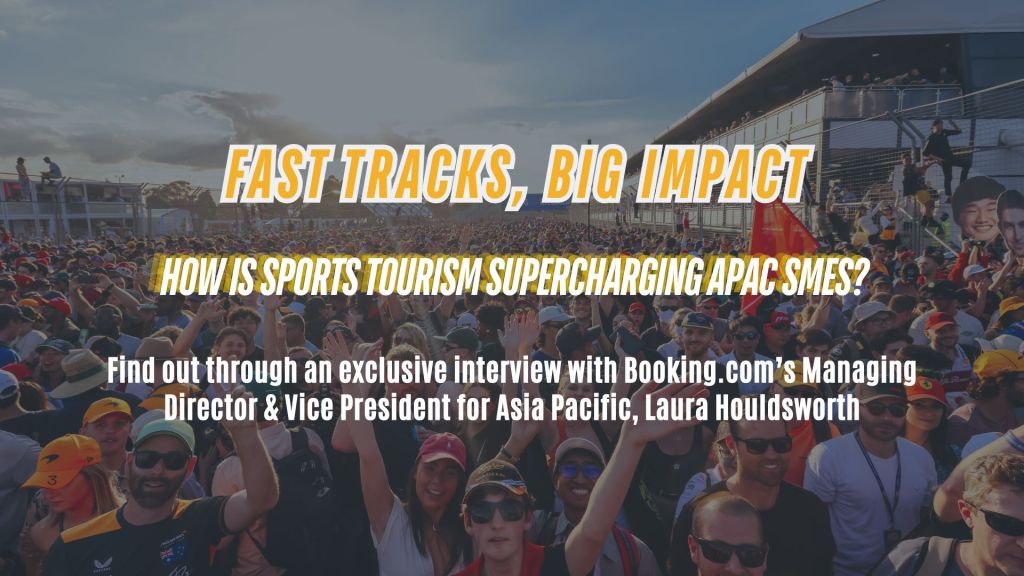
Asia Pacific is rapidly becoming a magnet for major global events. We see premier spectacles like Formula 1 (F1) races sending powerful ripple effects through the region’s tourism economies. In an exclusive interview with Laura Houldsworth, Managing Director & Vice President for Asia Pacific at Booking.com, we explore how F1 and similar events are transforming the landscape for local businesses and SMEs across APAC.
As F1 races draw international crowds to cities like Melbourne, Shanghai, Suzuka, and Singapore, the benefits extend far beyond the race tracks—fuelling demand for local businesses, especially small and medium-sized enterprises (SMEs).
F1’s economic ripples beyond the track
F1 events are not just sporting highlights; they are economic catalysts. Laura explains that these events create a demand that extends far beyond racetracks, increasing reservations for lodging and airfare as well as spending on dining establishments, shops, local tours, and cultural attractions. For instance, since its inception in 2008, the F1 Grand Prix in Singapore has increased tourism revenues by more than S$1.5 billion . During race weekends, hotels frequently fill up to full capacity, with both business and leisure travellers driving up average daily rates. But the impact goes much further as visitors extend their stays and explore the city, leading to an increase in business for local eateries, shops, tourist destinations, and tour companies.
According to a study on the Shanghai Grand Prix. Sports tourism, driven by events like F1, has tangible advantages for local SMEs, mainly in the automobile, hospitality, and sporting industries. Such enterprises had seen higher sales, enhanced brand recognition, and new opportunities for partnerships as a direct result of hosting such a high-level sports event.
The effect of such events on businesses is not just a fleeting, one time impact. F1’s global spotlight can help position host cities as must-visit destinations, drawing repeat visitors and inspiring future travel. This ensures that tourism is sustained or even increases, in the long term although the event has already ended.
Stephane Fabregoul, Managing Director of the JW Marriott Singapore South Beach, highlights the wider significance of F1 for Singapore, underscoring this ripple effect. She states “This race is a significant milestone in Singapore’s efforts to bring back international travel and large-scale events that will boost the country’s economy”.
Beyond the finish line, sports tourism genuinely ignites a cascade of positive effects that boost local economies and fortify communities.
The SME advantage: Authentic experiences and local colour
Small and medium-sized businesses (SMEs) make up the great majority of companies in the Asia Pacific tourism industry. SMEs make up more than 85% of all companies that depend on the money spent by tourists, including lodging facilities, dining establishments, tour companies, retail stores, and local attractions. These small businesses provide the genuine, off-the-beaten-path experiences that modern tourists seek. For these companies, big events like F1 serve as a springboard, attracting new clients and increasing sales during busy times. Longer stays and higher spending are frequently the results of the influx of event-driven tourists. The average duration of stay for F1 visitors in Singapore has more than doubled, with visitors spending time exploring local cuisine, customs, and retail establishments following the race. SMEs benefit greatly from this prolonged engagement since it allows them to present their distinctive products to a worldwide audience.
How local SMEs are empowered by Booking.com

Booking.com is essential for bringing tourists and local companies together, particularly during busy times like F1. Laura Houldsworth, Managing Director, Asia-Pacific at Booking.com revealed that the key to helping SMEs turn more browsers into bookers is to comprehend traveller demographics, behaviour, convenience, and trends.
As such, Booking.com works closely with SME partners, providing them with the tools to analyse demand data for their property and turn these insights into successful, actionable plans. Small businesses can adjust their pricing to maximise bookings by tracking when and where interest is peaking, whether it’s during important sporting events or seasonal spikes. For instance, in order to draw tourists from particular markets who are interested in local events, properties can implement targeted rates and special discounts. In addition, Booking.com’s SME partners have access to curated deals and tailored recommendations designed just for their property. This personalised support empowers even the smallest players to thrive during peak travel periods and make the most of every opportunity.
Booking.com has increased its product offerings through strategic alliances to satisfy the growing demand for experiential travel. Their collaboration with Klook, one of Asia Pacific’s top experience platforms, is one such instance. Travellers can find and reserve genuine experiences more easily thanks to this partnership, which increases access to local tours and attractions.
Resources and assistance for SMEs: Leveraging sports tourism
Mega sporting events create spikes in travel demand, and Booking.com is focused on helping SMEs grasp and take advantage of these opportunities. A major area of support is payments.
Today, smooth payment solutions are crucial since tourists from all over the world come from a variety of markets. Booking.com’s Payments allow customers to use a variety of payment methods, giving visitors their preferred local payment options while guaranteeing that SMEs can accept them with ease. In addition to helping our SMEs expand their businesses and create new revenue streams, this also makes the payment process entirely seamless for clients worldwide.
Laura explained that more than 40 new payment methods, including well-known digital wallets and local card payments in important APAC markets, are now available thanks to the recent partnership with Antom. Smaller homes and vacation rentals that might not have access to conventional payment infrastructure will particularly benefit from this. During the busiest travel seasons, Booking.com helps SMEs expand their businesses and open up new revenue streams by facilitating seamless transactions and providing targeted marketing tools
The Digital roadmap & deepening SME partnerships in APAC
Digital travel is the way of the future. 72% of travellers in the Asia-Pacific region intend to use technology to make educated decisions and look for genuine experiences, according to Booking.com’s Travel Predictions. By improving its platform, Booking.com aims to level the playing field for SMEs and make it quicker for SMEs to connect with tourists from other countries, taking advantage of the region’s event-driven tourism boom. The cooperation between international spectacles like F1 and regional SMEs will only intensify as APAC continues to rise as a top-tier destination for major events. By utilising partnerships, technology, and data-driven insights, platforms like Booking.com are ensuring that the advantages of sports tourism are felt throughout the host cities, not just in stadiums.
As APAC grows as a world hub for top sporting events, opportunities for SMEs working in the travel industry have never been greater. The economic multiplier effect of F1 and other such events spreads far wider than the circuit, with stimulating impacts on local economies and enabling small businesses to showcase the best of what their destinations have to offer. With portals like Booking.com tearing down the barriers and making it easier for international tourists to access SMEs, the future of APAC sports tourism looks bright and promising.
By embracing innovation, data-based intelligence, and strategic partnerships, nSMEs can shape the future of tourism. For entrepreneurs and communities, the race is on, and the finish line is growth, resilience, and a prosperous, networked tourism economy for all.
If you’re an SME in APAC, now is the time to tap into the momentum of sports tourism. Explore partnerships, leverage digital tools, and position your business at the forefront of this exciting new chapter. The world is coming to APAC – is your business ready?


 The Next Idea
Leave a comment