For years, sustainability has shifted from a buzzword to a boardroom imperative. Governments, investors and increasingly customers are scrutinising environmental, social and governance (ESG) practices as a signal of organisational resilience and future readiness.
In Singapore, a nation committed to significant environmental targets under the Singapore Green Plan 2030, a whole-of-nation sustainability roadmap, the stakes are high. Yet, when it comes to small and medium enterprises (SMEs), a paradox has emerged: while sustainability rhetoric has grown louder, meaningful action on the ground remains limited.
According to the 2025 SME Sustainability Barometer, a study by sustainability platform Gprnt and PwC Singapore surveying more than 560 local SMEs, three in four have yet to embark on a sustainability journey. These firms either haven’t started at all or remain at a nascent “beginner” phase, with only a small fraction actively implementing sustainability policies.
This gap between sustainability aspiration and action is not just a policy concern. It poses both a strategic risk and an opportunity for SMEs keen to stay competitive in a market where buyers, supply chains and regulators increasingly differentiate between businesses based on credible ESG outcomes.
Why Singapore SMEs lag behind
The Barometer paints a clear picture of where the challenges lie. Three major barriers repeatedly surfaced:
1. Financial constraints and unclear returns (52%)
More than half of SMEs cited tight operating margins and uncertainty over the business returns from sustainability investments as key reasons they have not started meaningful action. For firms grappling with cost pressures and inflationary headwinds, sustainability often ranks below immediate business priorities.
2. Lack of skills and know-how (75%)
Many SMEs recognise sustainability is important, but translating that into measurable action, whether carbon tracking, waste management protocols or energy efficiency improvements, requires expertise many simply do not have in house.
3. Time and resource constraints (40%)
SME leadership teams are notoriously stretched. With day-to-day survival taking priority, carving out bandwidth for long-term sustainability planning, especially when the immediate business case feels ambiguous, remains difficult.
Compounding these barriers is a curious statistic: over 70% of SMEs have not tapped any form of government assistance, despite an array of support schemes aimed at making sustainability easier and more accessible.
Singapore Green Plan 2030
The Singapore Green Plan 2030 is the government’s comprehensive sustainability framework designed to translate climate commitments into measurable milestones across sectors. It encompasses five pillars, including Energy Reset, Sustainable Living, Green Economy and Resilient Future and embeds sustainability into the national economic strategy.
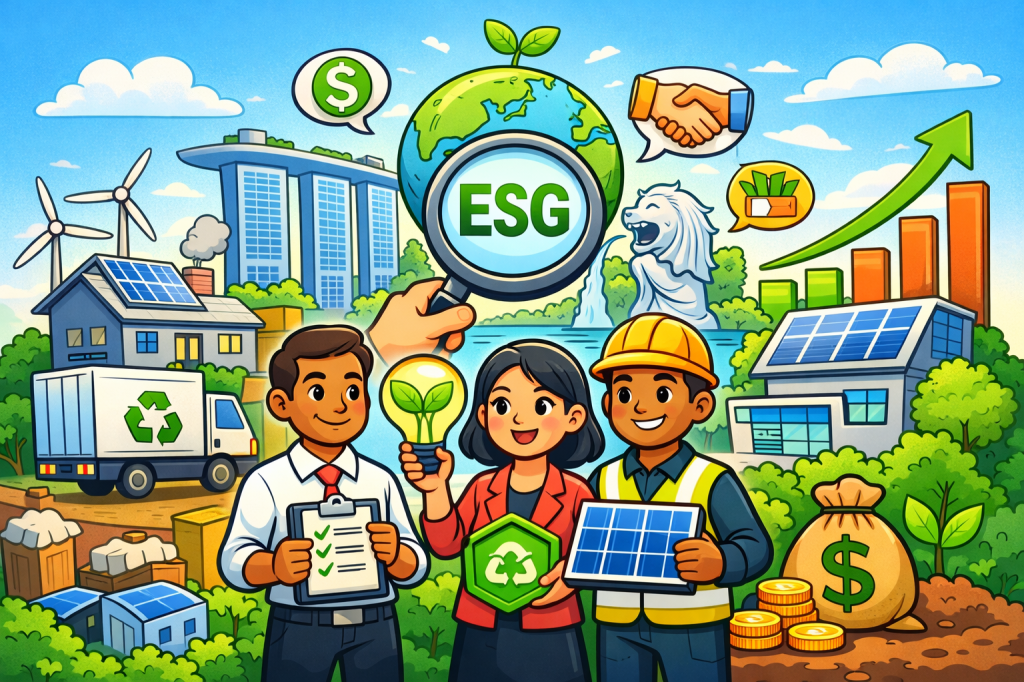
For businesses, this means not just aligning with domestic targets like reducing emissions or adopting clean technologies, but increasingly responding to a policy ecosystem where sustainability capability is becoming intertwined with competitiveness. The Green Plan includes various support measures and incentives, from capability-building initiatives under the Enterprise Sustainability Programme to funding and technical support for energy and resource efficiency.
Yet these resources are underutilised and many SMEs remain unaware or unsure how to engage with them effectively.
Changing market signals
Beyond policy, market forces are pointing decisively towards sustainability as a value driver, not just a compliance burden.
Data from 2024 sustainability surveys suggest that nearly half of consumers in Singapore report making more sustainable purchasing choices since 2020 and a third are willing to pay a premium for greener products. As buyers become more discerning and corporations tighten supplier ESG requirements, SMEs without credible sustainability credentials risk losing access to lucrative contracts or facing price competition from greener peers.
This shift isn’t hypothetical. It’s already underway. Large corporations participating in Singapore’s supply chain ecosystem are increasingly factoring ESG into procurement decisions, indirectly encouraging SMEs to adopt transparent sustainability practices to remain eligible vendors.
Turning the sustainability gap into competitive advantage
The good news for Singapore SMEs is that the sustainability gap represents a strategic opportunity to differentiate, innovate and unlock new value. Here’s how SMEs can move from inaction to meaningful progress:
1. Start with practical, measurable first steps
Even a simple baseline assessment, tracking energy use, waste output or key environmental metrics, can illuminate opportunities for improvement. Tools and platforms that automate carbon data collection and emissions tracking can reduce the initial complexity for smaller firms.
Setting a sustainability champion within the organisation, even at an operational level, can help embed accountability and push action from within, rather than relying solely on leadership bandwidth.
2. Leverage government programmes and funding
Singapore’s Enterprise Sustainability Programme is designed to help SMEs build capability and capture green opportunities, with a substantial funding pool earmarked to support training, certification and capability building.
Other schemes, such as the Energy Efficiency Fund and Water Efficiency Fund, offer co-funding and incentives for businesses to adopt concrete resource-saving technologies.
Actively engaging with these programmes not only offsets costs but signals a firm’s commitment to sustainability to customers, partners and investors.
3. Tell your story through data and reporting
Today’s ESG landscape rewards transparency. While formal sustainability reporting isn’t yet mandatory for most SMEs, adopting basic reporting practices positions businesses to compete more effectively for supply chain roles and financing and enhances brand trust.
4. Collaborate and learn from peers
Collective action, whether through industry clusters, trade associations or partnerships with larger corporations, can reduce individual cost burdens and share best practices. Initiatives like “Queen Bee” programmes, where large firms support SME sustainability capability building, are examples of collaborative models that can accelerate adoption.
From gap to growth in 2026
Singapore’s SMEs stand at a strategic inflection point. The sustainability gap is real, with three in four firms yet to fully act, but it also highlights a significant upside for those willing to embrace change. The combination of policy support, market expectations and evolving customer preferences means that sustainability is no longer a secondary consideration. It’s a driver of resilience, innovation and competitive edge.
Closing the gap won’t happen overnight, but with intentional, phased actions, starting with data, support and storytelling, Singapore’s SMEs can transform sustainability from an abstract goal into a tangible growth strategy for the decade ahead.
Also read: How Singapore’s SMEs are building a greener future for Southeast Asia

 The Next Idea
Leave a comment