Southeast Asia has become one of the most attractive regions for multinational expansion. Yet for enterprises attempting to scale internal systems across the region, it is also where global operating models are most likely to break.
The challenge is not ambition or investment. It is complexity.
As organisations expand across Malaysia, Indonesia, Vietnam and the Philippines, they face a familiar but unresolved tension: how to maintain global consistency while navigating deeply local regulatory, payroll and workforce realities. HR systems, often underestimated, sit at the centre of this tension.
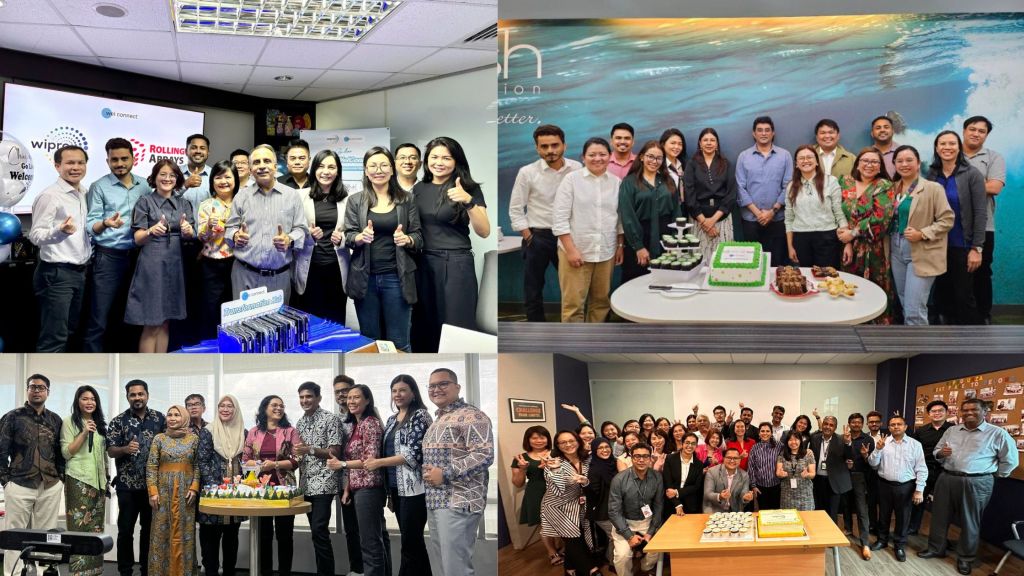
A recent multi-country HRMS rollout by Rolling Arrays and Wipro Consumer Care & Lighting offers a clear view into why Southeast Asia demands a fundamentally different approach to enterprise system design and execution.
Why Southeast Asia resists global templates
Global HR platforms are typically designed around a centralised logic. Core data models are standardised, processes are harmonised and local variations are treated as exceptions to be managed. This logic works well in regions with relatively aligned labour frameworks.
Southeast Asia does not fit that mould.
Each market operates under distinct statutory requirements, payroll structures and compliance regimes. Even neighbouring countries differ significantly in how employment relationships are regulated and enforced. Beyond regulation, organisations must account for language, digital maturity and cultural expectations around employee experience.
In practice, this means that global HR templates often collapse under regional pressure. What looks coherent at headquarters becomes brittle at the country level.

“As organisations scale across borders, the real challenge is balancing global consistency with local relevance,” said Manu Khetan, Founder & CEO of Rolling Arrays.
“This programme with Wipro Consumer Care International reflects a growing shift towards HR platforms that are not only standardised, but designed to deliver meaningful employee experiences and actionable insights across diverse markets.”
According to Rolling Arrays, this is where many global HR transformations falter. The mistake is not choosing the wrong platform, but assuming that implementation is a technical exercise rather than an organisational one.
From implementation to operating design
Rolling Arrays anchored the programme on a global design framework that clearly defined what needed to remain standardised and where localisation was non-negotiable. Core HR data structures, analytics logic and governance principles were aligned globally. Payroll integrations, statutory workflows and operational nuances were deliberately localised.
This approach reflects Rolling Arrays’ broader philosophy in regional HR transformations: standardisation should create clarity, not constraint.
In Southeast Asia, this balance is critical. Excessive localisation fragments data and weakens leadership visibility. Over-standardisation leads to operational risk, workarounds and employee dissatisfaction. The role of the transformation partner is to navigate this trade-off with precision.
HRMS as decision infrastructure
One of the most important shifts highlighted by this rollout is the changing role of HR systems themselves.
HRMS platforms are no longer administrative back-office tools. In multi-country organisations, they increasingly function as decision infrastructure. Leadership relies on them for workforce analytics, cost modelling, talent planning and risk management. Inconsistent or unreliable data across markets directly undermines strategic decision-making.
Rolling Arrays has observed that this shift is particularly pronounced in Southeast Asia. The region’s workforce volatility, regulatory diversity and pace of change mean that leadership teams require real-time, comparable insights to operate effectively.
By treating HRMS as part of the enterprise’s data and operating architecture rather than a standalone HR project, Wipro’s rollout reflects a more mature understanding of HR technology’s strategic role.
Why regional execution expertise matters
Another insight from this programme is the growing importance of regionally grounded execution partners.
Global system integrators often bring deep platform expertise but limited familiarity with Southeast Asia’s operational realities. Local vendors may understand statutory requirements but lack experience aligning with global governance and reporting standards. Rolling Arrays positions itself between these extremes.
With teams operating across Southeast Asia and Australia, Rolling Arrays specialises in translating global HR design into regionally executable systems. In the Wipro programme, this meant working closely with both HR and IT stakeholders to ensure that global intent was preserved without sacrificing local compliance or usability.
This hybrid capability is becoming increasingly critical as enterprises pursue multi-country rollouts across Asia Pacific.
Southeast Asia as a proving ground for enterprise systems
From Rolling Arrays’ perspective, Southeast Asia functions as a stress test for enterprise design. Systems that can accommodate its complexity tend to be resilient, scalable and analytically robust. Those that cannot often accumulate technical debt, parallel processes and manual interventions.
This is why analysts increasingly identify Asia Pacific as both a growth engine and a complexity driver for enterprise platforms. HR technology, in particular, sits at the intersection of regulation, data and human behaviour, making it especially sensitive to regional variation.
Wipro’s HRMS expansion demonstrates that success in this environment requires more than platform selection. It demands thoughtful operating design, disciplined governance and execution partners with regional depth.
Beyond HR: broader enterprise implications
While this case centres on HRMS, the implications extend well beyond HR.
Finance, procurement, compliance and customer data platforms face the same regional dynamics. Southeast Asia challenges enterprises to rethink how global systems are structured, governed and rolled out. The lesson is consistent: scalable systems are not those that eliminate difference, but those that are designed to absorb it.
Rolling Arrays’ work with Wipro Consumer Care & Lighting reflects a broader shift in how enterprises approach transformation in the region. The focus is moving away from technology-led rollouts towards systems-led thinking, where platform design, data strategy and operating models are developed together.
A quiet but consequential transformation
Enterprise system transformations rarely attract attention when they succeed. Yet they shape how organisations function long after go-live.
Wipro’s Southeast Asia HRMS rollout underscores a critical insight for enterprises expanding in the region. Southeast Asia does not require lower ambition. It requires better design.
For leading players in the HR industry, the opportunity lies in helping organisations move beyond global templates towards operating architectures that respect regional complexity while enabling global clarity. In Southeast Asia, that capability is no longer optional. It is foundational.
Also read: The ultimate guide to talent attraction for SMEs in Malaysia

 The Next Idea
Leave a comment