March-April is when hiring quietly accelerates. Bonuses are paid. Resignations follow. Teams start feeling stretched. And suddenly, founders who were focused on growth in January and sales in February find themselves dealing with something far more difficult to fix: hiring.
For SMEs, hiring has always been challenging. But in 2026, it has become even more complex. Large companies are offering higher salaries, remote flexibility and stronger employer brands. Meanwhile, SMEs often rely on referrals, WhatsApp CVs and informal interviews to fill urgent roles.
It works, until it doesn’t. Many SMEs believe they have a talent shortage. In reality, they often have a process shortage. Without structured hiring, businesses make decisions based on urgency rather than fit. And when the wrong hire happens, the cost is rarely just salary. It affects productivity, team morale and sometimes even customer relationships.
This is where structured hiring for SMEs becomes less of an HR concept and more of a business strategy. Because hiring is not just about finding talent. It is about reducing risk.
Why hiring breaks in SMEs
Unlike larger organisations, SMEs rarely have dedicated HR teams. Hiring is often handled by founders, team leads or whoever has the most time that week.
This leads to three common patterns:
- First, roles are poorly defined. Businesses know they need help, but not exactly what outcome they expect. This leads to vague job descriptions and mismatched expectations.
- Second, interviews become inconsistent. One candidate is assessed on skills, another on personality, and another on availability. There is no shared framework for decision-making.
- Third, decisions are rushed. When a team is stretched, speed often overrides judgement.
These issues do not appear immediately. But over time, they create hiring cycles where SMEs repeatedly hire, retrain and replace. This is why many SMEs start looking for SME hiring tools that introduce structure without adding complexity.
The shift towards structured hiring
Structured hiring is not about adding bureaucracy. It is about creating clarity. Instead of relying on instinct, structured hiring introduces consistency into three areas:
- Role definition
- Candidate evaluation
- Decision making
For SMEs, this is especially valuable because hiring mistakes are harder to absorb. A single wrong hire in a five-person team has a far bigger impact than in a 500-person organisation.
This is also why many SMEs are beginning to adopt lightweight hiring platforms that help formalise the process without requiring HR expertise. One such tool that stands out for SMEs is Workable.
Tool of the month: Workable
Workable is a hiring platform designed to help businesses manage recruitment in a structured but simple way. For SMEs, its biggest advantage is that it introduces clarity without requiring a full HR function.
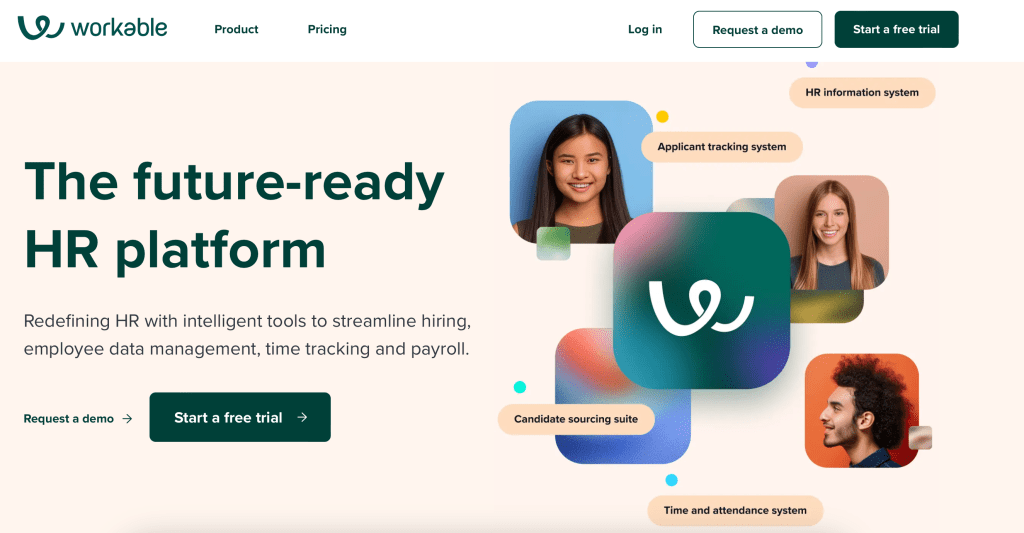
Instead of tracking candidates across emails and spreadsheets, everything sits in one pipeline. Roles can be clearly defined, candidates can be evaluated using consistent scorecards and hiring decisions become easier to justify.
But the real value is not the features. It is the behavioural change it creates. When SMEs introduce structured hiring, three things begin to happen:
- First, hiring becomes proactive instead of reactive. Businesses define what they need before they start searching.
- Second, decisions become more objective. Interview scorecards help teams assess candidates consistently.
- Third, hiring becomes faster. Clear pipelines reduce back and forth communication.
For SMEs competing against larger companies, speed and clarity often matter more than salary.
What SMEs should actually look for
When evaluating SME hiring tools, founders should focus on practical outcomes rather than feature lists. Start with role clarity. A good hiring tool should help define outcomes rather than just job titles.
Next, look for structured evaluation. Interview scorecards ensure candidates are assessed fairly and consistently. Then, consider candidate visibility. A simple pipeline helps teams track progress without confusion.
Finally, focus on collaboration. Hiring decisions should not rely on one person’s opinion. These may sound basic, but they address the core reasons hiring breaks in SMEs.
Why structured hiring matters more in 2026
Hiring is becoming one of the most strategic decisions SMEs make. As teams become leaner, each hire carries more responsibility. At the same time, competition for talent continues to increase, especially across Southeast Asia.
This means SMEs cannot rely purely on instinct anymore. Structured hiring for SMEs does not mean becoming corporate. It means becoming intentional. Because the businesses that hire well do not just grow faster. They also grow more sustainably.
The real takeaway
SMEs often believe hiring is about finding better candidates. But more often, it is about building a better process because when hiring becomes structured, decisions become clearer. Mistakes become fewer and growth becomes easier to manage. And in a tight talent market, that is often the difference between scaling smoothly and constantly rebuilding your team.
Also read: Sales without the chaos & how SMEs can use one CRM to fix follow-ups before they break

 The Next Idea
Leave a comment