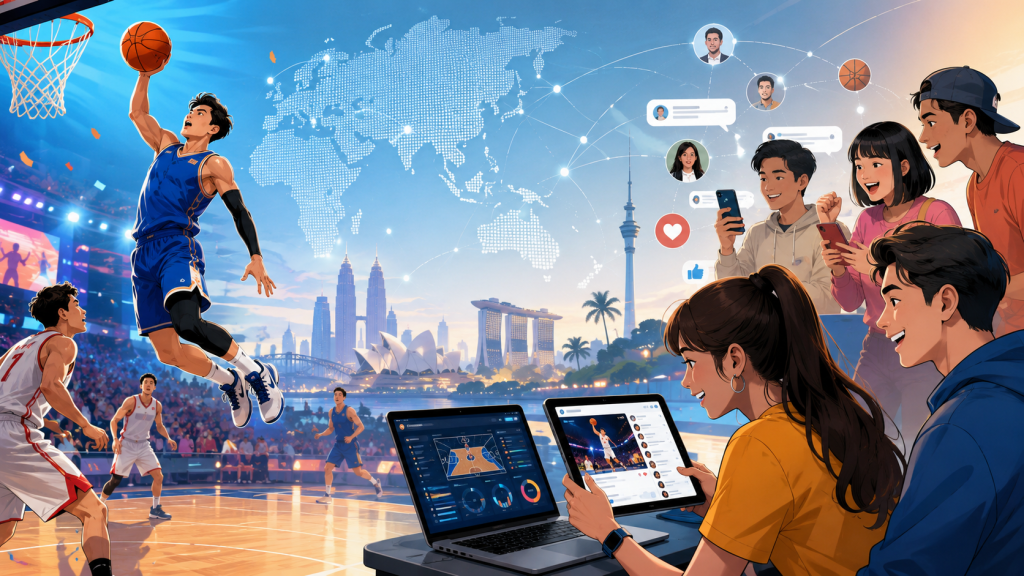
Basketball has always been built for momentum. A fast break, a buzzer-beater, a chasedown block or a no-look pass can change the mood of a game in seconds. That same rhythm has also made the sport especially suited to the digital age, where fans increasingly discover, follow and debate sport through clips, personalities, live updates and second-screen conversations.
For SMEs, there is an important lesson here. The way younger audiences engage with basketball is very similar to how modern customers now engage with brands. They do not always begin with a full match, a full article, a product catalogue or a carefully planned campaign. They begin with a moment. A short video. A customer review. A founder’s post. A WhatsApp recommendation. A Google search. A TikTok clip. A behind-the-scenes Reel. A comment thread. A useful answer that appears at exactly the right time.
In other words, the customer journey is no longer neat, linear or fully controlled by the business. It is fragmented, fast-moving and shaped by repeated small interactions across different platforms.
For SMEs in Singapore and across the region, this matters. Many small businesses still think about marketing in terms of campaigns: a festive promotion, a product launch, a one-off social media push, a discount period or a paid ad burst. These can still work, but they are no longer enough on their own. Customers today are not only persuaded by the biggest campaign. They are influenced by the many small moments that happen before, during and after a purchase.
Customers may discover you through a moment, not your main offer
Basketball fans today may not start by choosing a team. They may start with a highlight. A spectacular dunk appears on their feed. A player’s personality catches their attention. A creator explains why a team’s offence is exciting. A fantasy discussion makes them care about a role player. A live-score alert pulls them into the fourth quarter of a close game.
That pathway is fragmented, but powerful. The same thing happens with SME customers. A customer may not first encounter a café through its website or menu. They may see a Reel of its most photogenic dish. A parent may not first discover an enrichment centre through a brochure. They may see another parent’s review in a Facebook group. A business owner may not first find an accounting firm through a paid ad. They may read a LinkedIn post explaining a tax deadline in simple language.
This is why SMEs need to stop assuming that their main product page, homepage or sales pitch is the beginning of the customer journey. In many cases, the first touchpoint is much smaller and more casual.
A useful post. A good photo. A clear answer. A relatable founder story. A customer testimonial. A quick explainer. A timely reminder. These moments may feel minor, but they are often the entry point into the brand.
Short-form content should feed the business, not replace it
Basketball has adapted well to the short-form era because its best moments are easy to understand. A three-pointer from the logo, a crossover that sends a defender stumbling or a last-second game-winner needs little explanation. These clips travel quickly because they are visual, emotional and immediate.
SMEs can learn from this without turning every business into an entertainment channel. The point is not to chase trends for the sake of it. The point is to use short-form content as a bridge into deeper engagement. A short video should not exist only to get views. It should help customers understand the business, trust the team, remember the brand or take the next step.
For example, a clinic can turn common customer questions into short explainers. A retail store can show how to use, style or compare products. A restaurant can show preparation moments, staff favourites or limited-time dishes. A B2B service provider can break down confusing industry topics into simple posts that help potential clients feel more informed.
Short-form content works best when it leads somewhere. That could be a booking, enquiry, store visit, newsletter sign-up, repeat purchase or stronger brand recall. For SMEs, the question should not be, “How do we go viral?” A better question is, “What small, useful moment can make a customer more likely to trust us?”
People are becoming the strongest brand channels
Basketball’s digital growth is not only about teams. It is also about players. Many younger fans follow players before they follow clubs or leagues. They connect with personalities, training clips, interviews, outfits, podcasts, gaming appearances and behind-the-scenes content.
This has a clear SME parallel. Customers often connect with people before they connect with logos. For a small business, the most powerful “media channel” may be the founder, the chef, the trainer, the stylist, the consultant, the teacher, the salesperson or the frontline team member. These are the people who make the brand feel real.
This is especially important for SMEs because they may not have the budgets of larger competitors. What they often do have is proximity. They know their customers. They know the questions people ask. They understand the small frictions that larger brands may overlook.
A founder explaining why they started the business can be more persuasive than a polished corporate video. A staff member showing how a product works can be more useful than a generic product description. A customer-facing employee answering common concerns can build more trust than a slogan.
The challenge is that many SMEs hide these human assets. They post product shots, promotional graphics and discount announcements, but rarely show the people, thinking and service behind the business. In a crowded digital environment, being human is not a soft extra. It is a competitive advantage.
The second screen is now part of the buying journey
Live sport is no longer watched in isolation. Fans watch with phones in hand, checking social media, live stats, group chats, fantasy platforms and commentary at the same time. Their attention is split, but that does not always mean it is lost. In many cases, the second screen makes the experience more participatory.
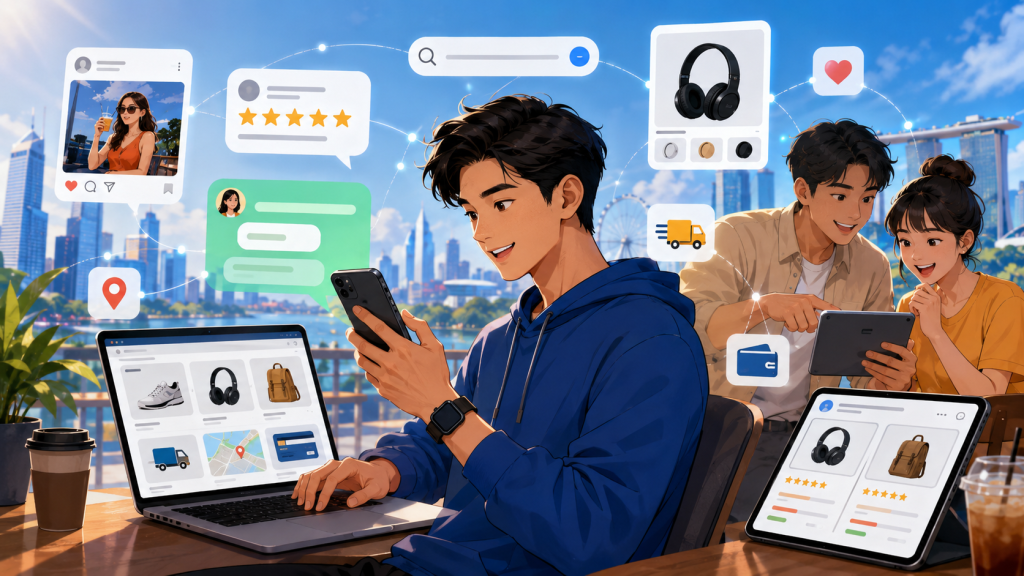
Customer behaviour works in a similar way. A person considering a purchase may visit an SME’s Instagram page, read Google reviews, compare prices, ask a friend, check TikTok, look at delivery options, message the brand on WhatsApp and search for alternatives, all before making a decision.
This means SMEs need to think beyond the single sales touchpoint. A customer may be interested, but if the information is unclear, the reviews are outdated, the social page is inactive or the WhatsApp response is slow, that interest can disappear quickly.
In sport, platforms such as the 1xBet app sit within this wider second-screen ecosystem by giving fans access to fixtures, live updates, match data and interactive features around the games they follow. The broader lesson for SMEs is not about sport alone. It is that digital customers increasingly expect information, interaction and decision-making support in real time. The “second screen” in commerce is really the trust-checking layer. Customers are constantly validating whether a business looks credible, responsive and worth their money.
That makes the basics more important than ever. Updated opening hours. Clear pricing where possible. Recent customer reviews. Easy-to-find contact details. Useful FAQs. Fast responses. Consistent social proof. A website or landing page that answers practical questions. These may not sound exciting, but they reduce friction at the exact moment a customer is deciding whether to move forward. For SMEs, digital engagement is not only about content creation. It is also about removing doubt.
Community keeps the brand alive between purchases
One reason basketball remains powerful online is that the conversation does not end when the game ends. Fans debate performances, share clips, analyse decisions, follow player updates and look ahead to the next match. The game creates the spark, but the community keeps the interest alive.
SMEs need their own version of this. Not every customer is ready to buy every day. But that does not mean the relationship has to go cold between purchases. Businesses can stay relevant through useful, timely and human content that gives customers a reason to keep paying attention.
This could include seasonal reminders, educational posts, behind-the-scenes updates, customer stories, founder notes, product care tips, event updates, staff recommendations or simple explanations of common problems.
For example, a home services SME can share maintenance reminders before peak seasons. A children’s activity provider can share parenting tips and class highlights. A small retailer can explain how to choose between products. A professional services firm can simplify regulatory changes or business deadlines.
The goal is not to overwhelm customers with constant promotion. It is to create a steady rhythm of value so the business remains familiar, useful and trusted.
SMEs need a moments-based content system
The shift from campaigns to moments does not mean SMEs need to post randomly or be online all day. In fact, the opposite is true. They need a simple system.
A moments-based content system starts by identifying the small interactions that matter most to customers.
What do people ask before buying? What makes them hesitate? What do they compare? What do they misunderstand? What do happy customers usually praise? What happens behind the scenes that customers would find reassuring? What seasonal reminders would be useful? What problems can the business explain better than competitors?
From there, SMEs can create repeatable content formats. These might include weekly FAQs, short customer stories, staff picks, “how to choose” guides, quick demonstrations, founder reflections, before-and-after examples, myth-busting posts or timely reminders.
This gives the business a consistent content engine without needing every post to be a major campaign.
It also helps SMEs make better use of limited resources. A single customer question can become a Reel, LinkedIn post, FAQ entry, newsletter section and sales script. A testimonial can become a social post, website quote and WhatsApp follow-up. A product demo can become a short video, carousel and in-store talking point.
The best SME marketing is not always about producing more. It is about turning everyday business knowledge into useful customer-facing moments.
The future customer may not enter through the front door
Basketball’s digital evolution shows how modern attention works. Fans may begin with a clip, a player, a debate, a live alert or a creator’s analysis before becoming more deeply invested in the sport.
SME customers behave in much the same way. They may not begin with the official campaign, the homepage or the sales pitch. They may begin with a small moment that feels useful, entertaining, timely or trustworthy.
That does not make campaigns irrelevant. It means campaigns need support from a wider ecosystem of touchpoints. The promotion, the social clip, the founder post, the review, the WhatsApp reply, the FAQ, the customer story and the after-sales follow-up are all part of the same customer journey.
For SMEs, this is both a challenge and an opportunity. The challenge is that attention is harder to control. The opportunity is that small businesses do not always need massive budgets to build trust. They need consistency, clarity and a better understanding of the moments that matter.
Basketball’s court may still be the centre of the sport, but the next generation of fans is being built everywhere around it: on phones, in feeds, across group chats and through interactive platforms.
For SMEs, the lesson is simple. The sale may still be the centre of the business, but the next generation of customers is being shaped everywhere around it. Businesses that understand those moments will be better placed to earn attention, build trust and stay relevant long after the campaign ends.
Also read: Why second-line leadership is the real growth lever for SMEs





Leave a Reply